Regulatory Monitoring Platform
@Big 5 Tech Company
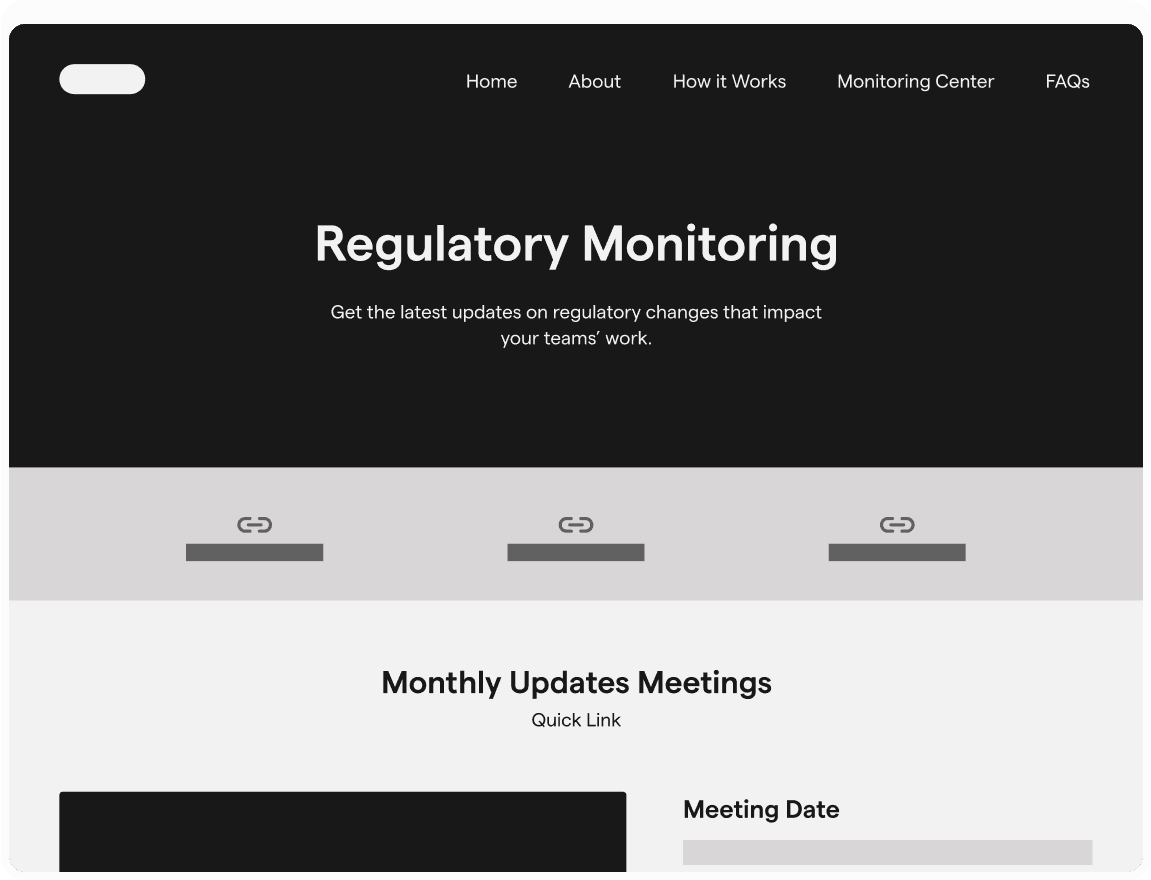
Designed a centralized regulatory monitoring platform that helps legal, compliance, and product teams track evolving regulations and understand their impact on company products.
Scope
UI/UX Design, Information Architecture, Data Visualization, Prototyping
Role
UX/UI Designer
Industry
Tech & Legal
Timeline
Jan - Feb 2023 (8 Weeks)
Tools
Figma, Tech Company’s Internal Web Building Tools
Background
It’s hard to keep up with changes
Regulatory changes affecting company products were frequent and complex in this industry leading tech company, yet teams lacked a reliable, shared source of truth.
Employees across legal, compliance, and product teams struggled to track updates, understand business impact, and identify the right stakeholders to coordinate compliance actions. This fragmented process created uncertainty, delayed responses, and increased reliance on ad-hoc communication.
Our Challenge
How might we help cross-functional teams (e.g. legal, compliance, and product) easily track, understand, and act on regulatory updates so products remain compliant?
Project Goal
Build a centralized platform where employees can track regulatory impacts to products and learn about how compliance teams add updates.
My Role
As the UX designer, I translated research insights into product direction and core platform features. I defined the information architecture, designed interactive dashboards, built prototypes, and iterated closely with stakeholders to ensure the platform aligned with real regulatory workflows and business needs.
Process Overview
Following an iterative, research-driven process
1
Discover
Empathize with users across teams to identify pain points, employee and business goals, and current processes for sharing regulatory updates.
2
Iteratively Build
Based on insights from the discovery phase, build a centralized platform in the company’s intranet to provide access to various regulatory information.
3
Validate
Test the platform with end users and define success metrics to measure adoption and effectiveness
Empathize
Understanding complexities of incorporating regulatory updates
We conducted interviews with legal, compliance, and product teams to understand how regulatory updates were monitored and acted upon. From this research, four key user needs emerged:
Educate
Understand the purpose and scope of the monitoring program
Monitor
Track regulatory updates and anticipate product impact
Identify
Surface and log new regulatory developments
Engage
Collaborate across teams through shared updates and discussions
Obstacles
Addressing obstacles and communicating with stakeholders
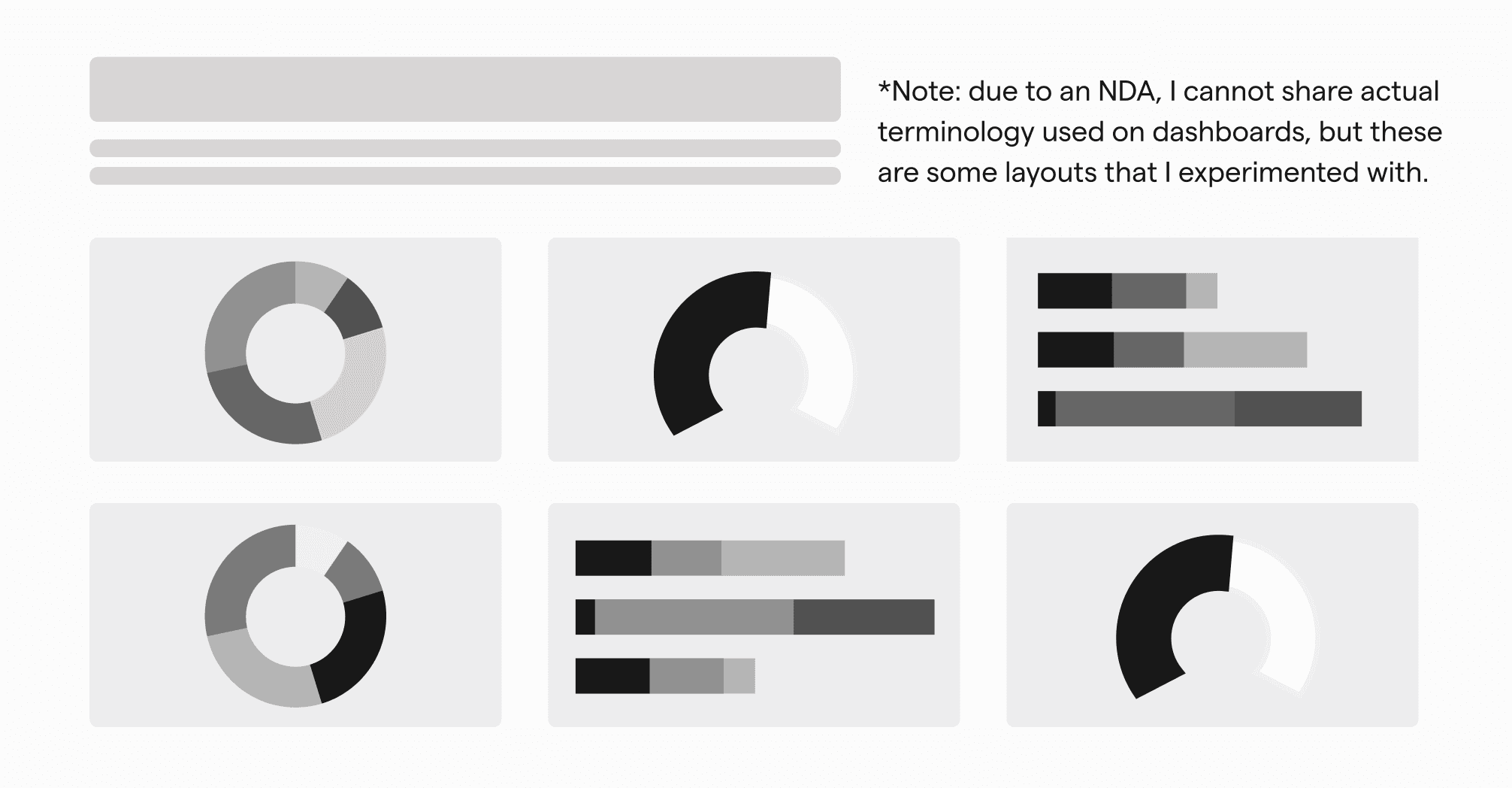
A key challenge was transforming large volumes of unstructured regulatory data into meaningful visual insights. I played a pivotal role in data cleanup and took the initiative to design interactive and visually engaging data dashboards. These dashboards on the 'Monitoring Center' page adhered to brand guidelines and featured straightforward visualizations to empower users in discovering and exploring updates.
At first, the client stakeholder had reservations about conducting in-depth user interviews. However, our team successfully addressed this challenge by:
Highlighting disparities in the program team's and our design team's comprehension of how various users track and monitor regulatory updates.
Presenting concrete findings from user research that the stakeholder swiftly integrated into their discussions about the regulatory monitoring program.
Build
Iteratively designing the monitoring platform
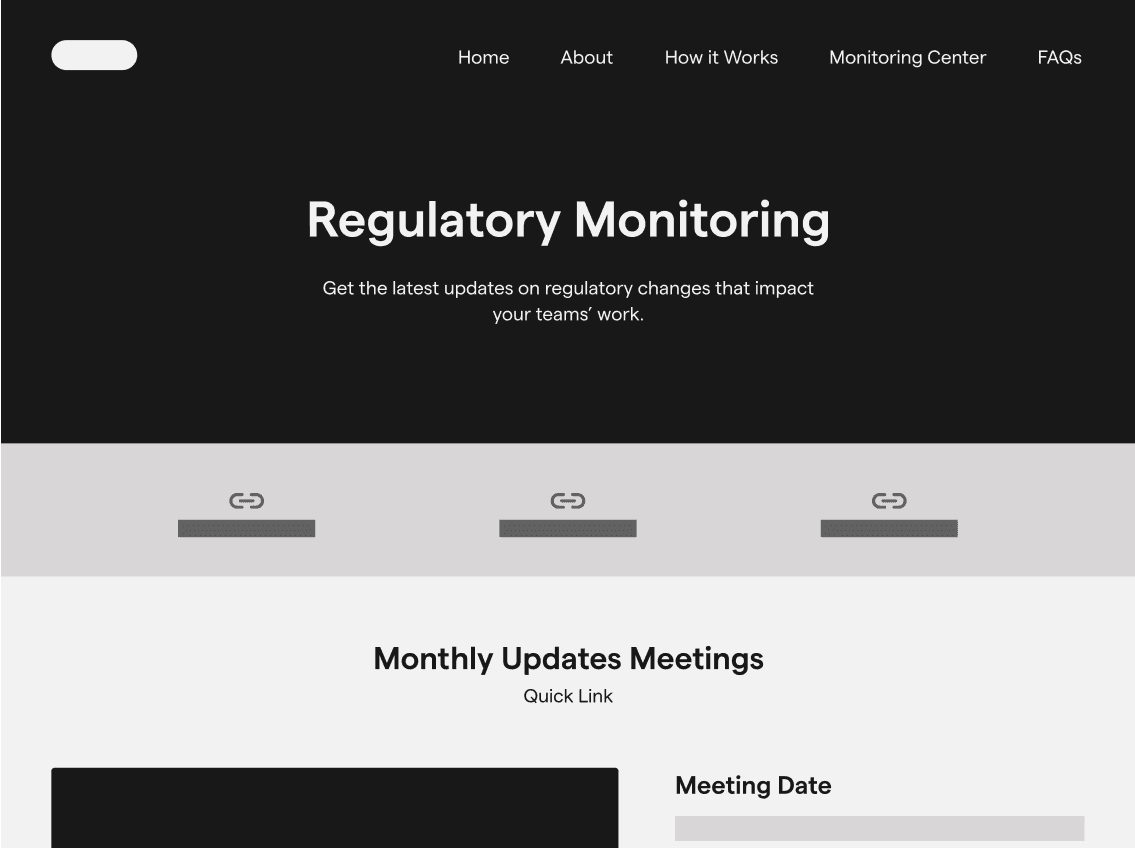
Through multiple iterations, I designed the platform’s structure and core navigation to prioritize discoverability, engagement, and regulatory visibility. The final platform provided dynamic, regularly updated regulatory content instead of static program information, helping teams stay informed about evolving changes.
The site architecture emphasized clear entry points into the Monitoring Center, enabling users to explore regulatory insights, track updates, and contribute new information.
Outcomes
How do we measure success?
The platform launched internally and was validated with end users across teams. Early feedback indicated improved visibility into regulatory updates and reduced reliance on informal communication channels.
Projected KPIs
Reduction in ad-hoc requests for regulatory updates
Increased awareness of the monitoring program across teams
Decrease in high-risk tickets related to regulatory changes
Feedback
“
“Went above and beyond [omitted tech company’s] expectations. Instead of simply building a site, [design team] helped enhance the underlying program while using the site to help amplify messaging and drive meaningful interaction.” - Primary Stakeholder
“Deepika who did an AMAZING job in delivering a site for the [omitted name] program. We just did our final walkthrough with the client and our work was met with very high regard.” - Design Team Lead
Opportunities
If I could, I would...
On the website, users can only see high-level updates, but need to reach out to the associated point of contacts for a more detailed breakdown of regulatory monitoring and business decisions.
In order to increase self-service on this website, it would be beneficial if the website displays information based on individual user permissions. User permissions can be defined by role and responsibilities related to regulatory monitoring.