MedTech AI Regulatory Application
@Multinational MedTech
Led product direction and UX for an AI-powered regulatory platform that automated MedTech product verification, reducing manual document processing and improving compliance efficiency across global teams.
Scope
UX Design, Product Management, Data Visualization
Role
Product Designer
Industry
MedTech
Timeline
Jan 2025 - June 2025 (6 months)
Tools
Figma, Jira
Background
Manual data collection slows compliance with global regulations, hindering global MedTech device distribution and sales for this organization
Global regulatory submission required teams to manually locate, extract, and verify device data across disorganized documentation. This fragmented process slowed compliance and contributed to ~$500M in annual operational costs. Teams spent significant time verifying product data attributes and confirming document accuracy across stakeholders.
What are data attributes?
Attributes refer to specific pieces of information or data fields that describe various aspects of medical devices, related entities, and activities. These attributes are critical for identifying, categorizing, monitoring, and managing medical devices across their lifecycle.
Each MedTech product has to be verified via data attributes to be sold in specific regions.
Our Challenge
Modernize existing processes to streamline regulatory compliance & maintain verified product records
Project Goal
How might we leverage AI to streamline and automate this process to reduce time spent on data extraction/submission and additionally improve data management in the longer term?
My Role
I led product and UX direction, defined core workflows, wrote user stories, and partnered with three engineering teams to ensure technical feasibility. I worked directly with stakeholders and end users to validate requirements, shape verification workflows, and align the platform with real regulatory processes.
Solution
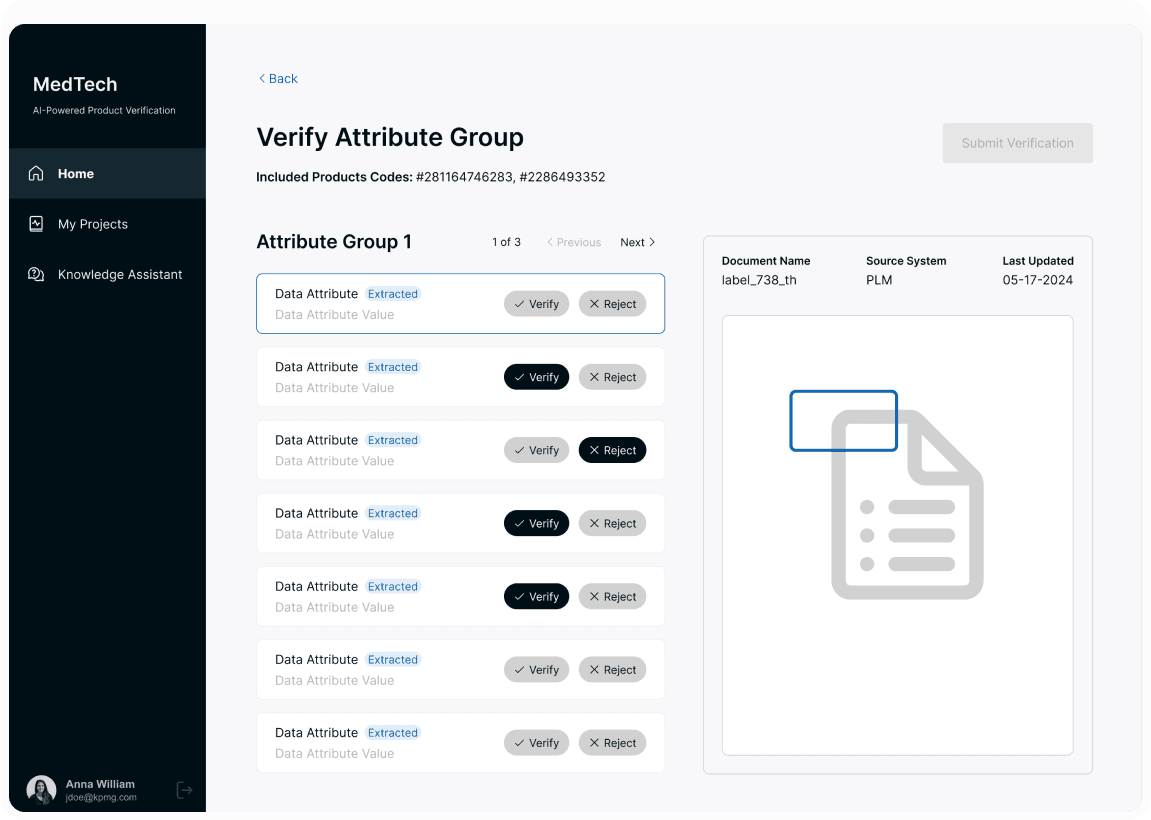
Application that consolidates the product verification process into distinct product submission, verification, and storage steps
We redesigned the fragmented verification workflow into a structured, AI-assisted pipeline: product submission → automated attribute extraction from MedTech device labels and instructions for use (IFUs) → human verification → long-term storage. This reduced manual searching, improved traceability, and ensured regulatory accuracy.
The platform transformed fragmented manual verification into a structured, AI-assisted workflow spanning product intake, attribute validation, and long-term regulatory knowledge management.
Core Features
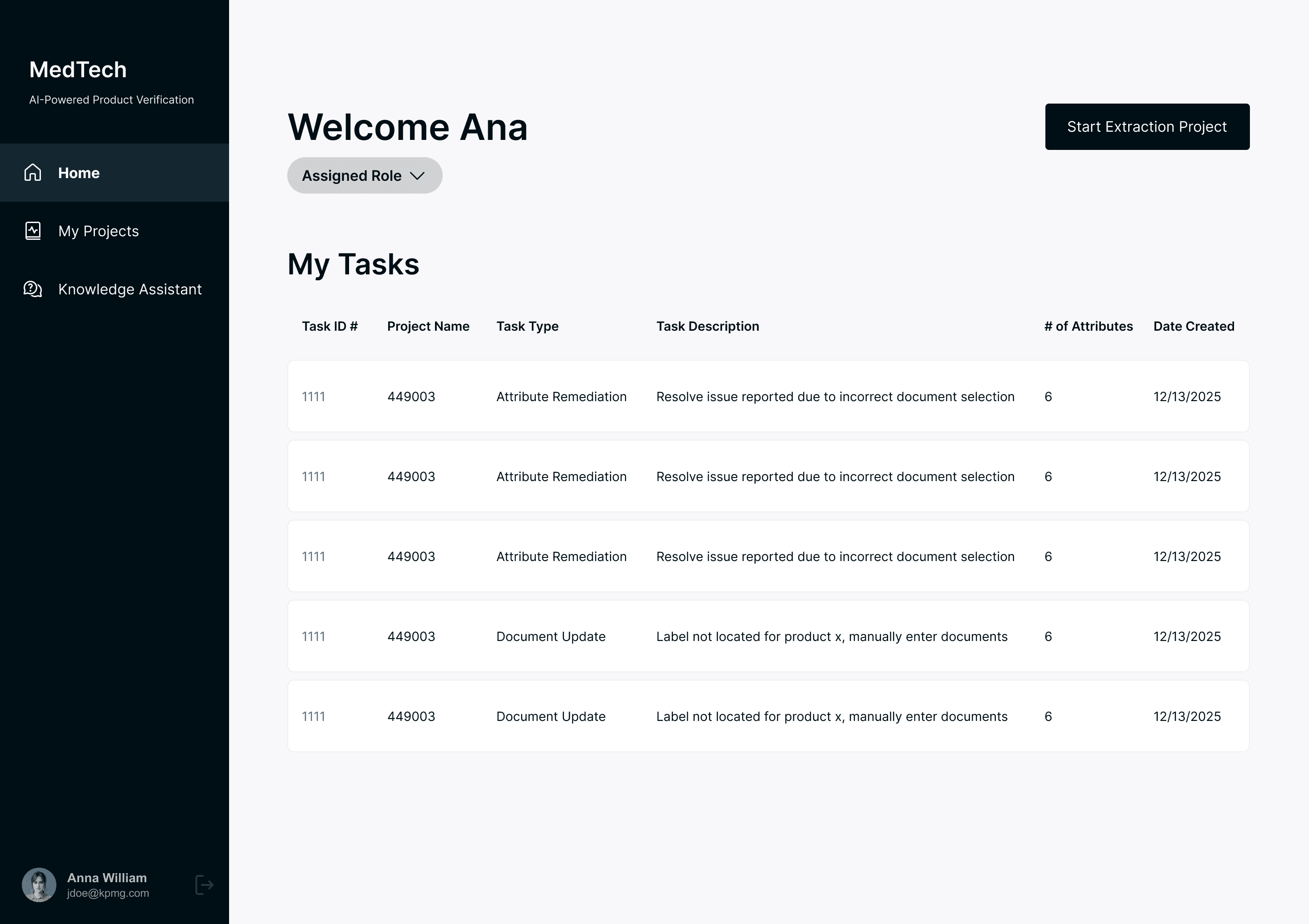
Home -> Submission & Extraction Entry Point
Guided product submission
Enables users to submit specific products into a structured verification workflow, ensuring consistent intake and reducing fragmented document handling.
Centralized document access
Provides direct visibility into product documentation, allowing users to quickly locate source materials needed for verification and reducing time spent searching across systems.
On-demand attribute extraction
Allows users to initiate AI-powered data extraction from product documents, accelerating the transition from raw documentation to structured, reviewable attributes.
Issue management during extraction
Surfaces extraction errors and inconsistencies early, enabling users to resolve data issues before entering the verification stage and improving downstream accuracy.
Core Features
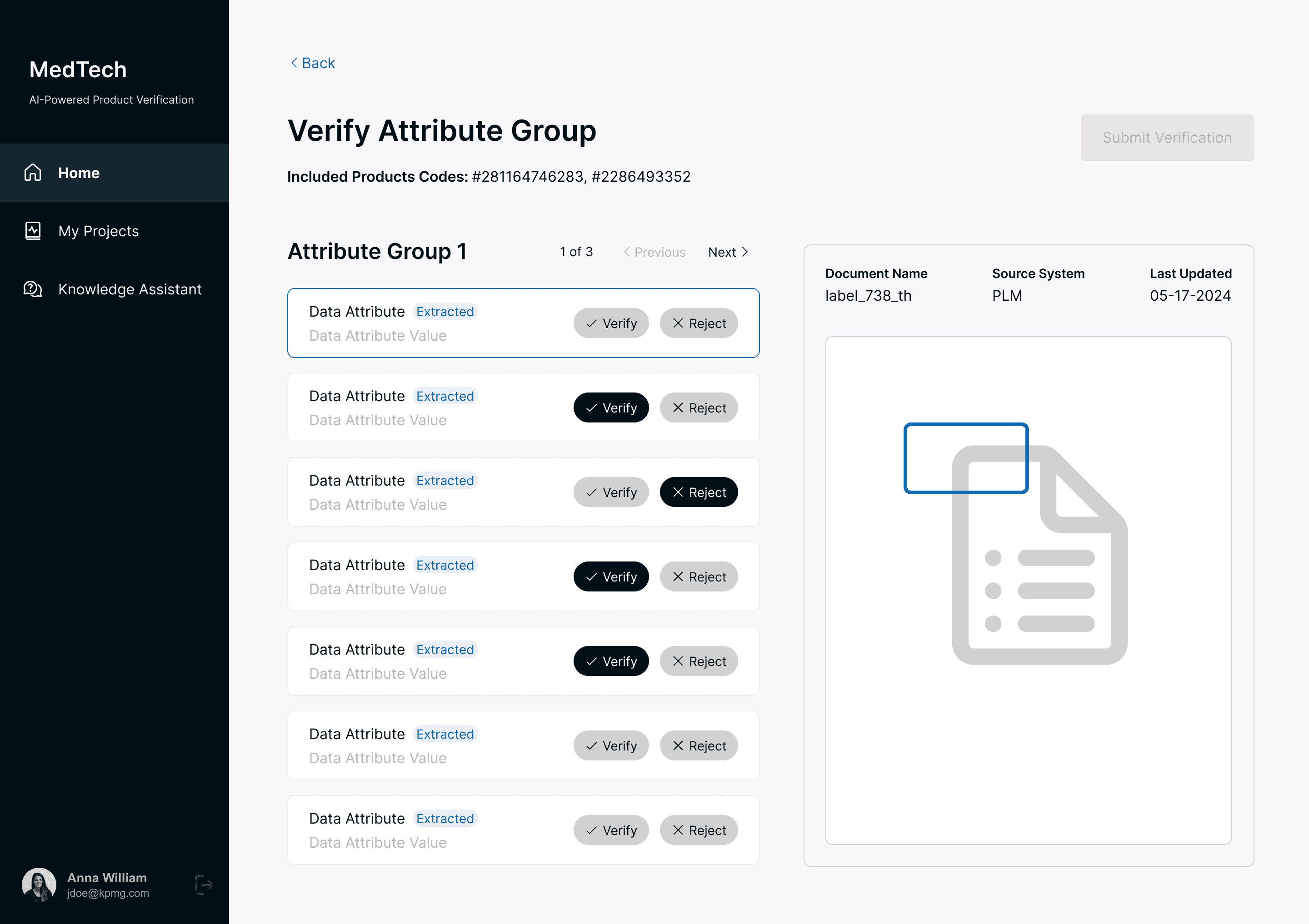
Product Verification -> Attribute Verification Workflow
Task-based verification structure
Breaks product verification into focused tasks so users can systematically validate each attribute, improving accuracy and reducing cognitive overload during complex reviews.
Side-by-side document comparison
Displays extracted attributes alongside source documentation, enabling quick cross-validation and reducing time required to confirm regulatory data.
OCR-assisted attribute highlighting
Automatically highlights extracted values within documents, helping users quickly locate supporting evidence and speeding up verification.
Human-in-the-loop validation
Allows users to confirm, correct, or reject extracted attributes, ensuring regulatory accuracy while maintaining the efficiency of automated extraction.
Core Features
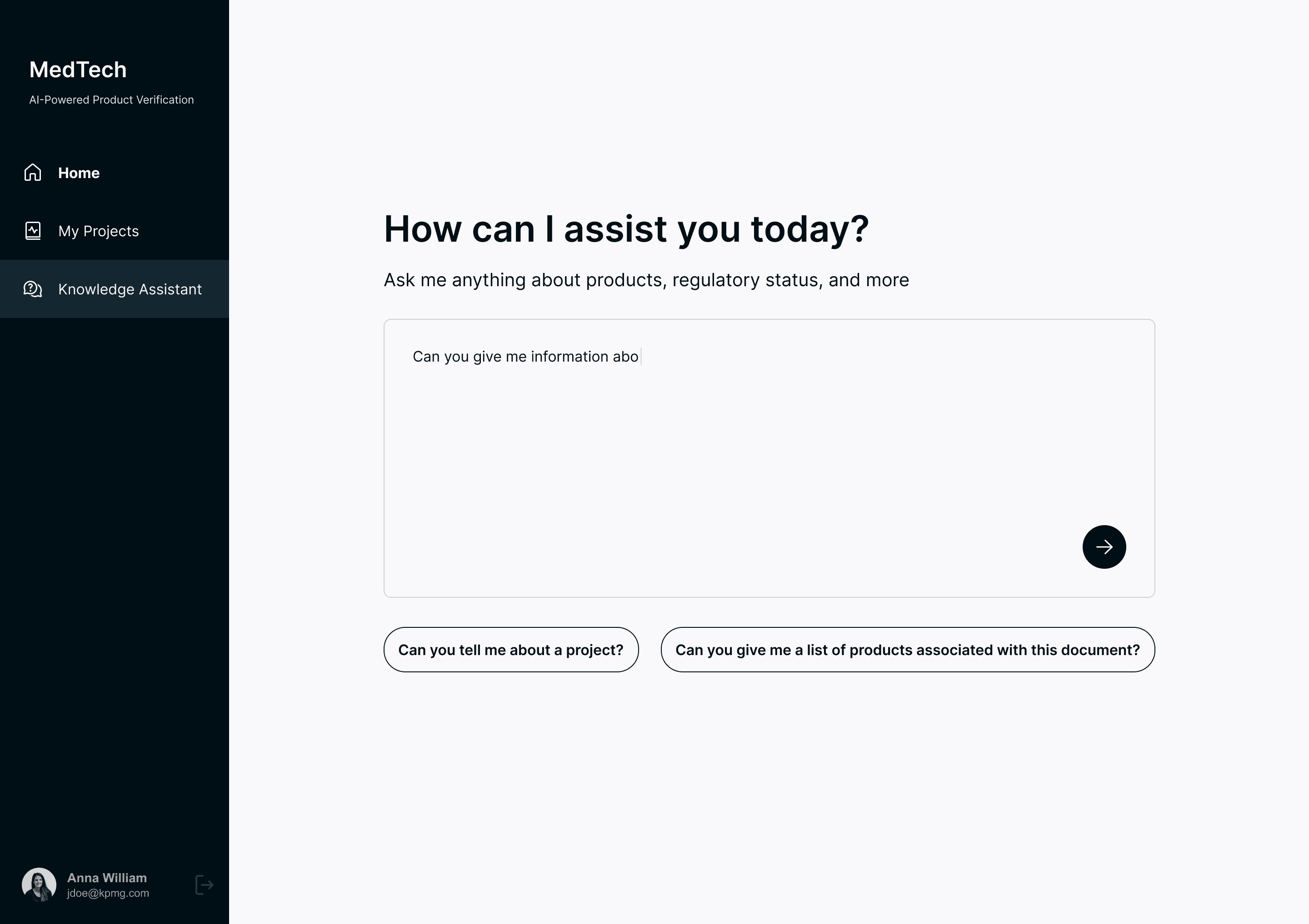
Knowledge Assistant -> Post-Verification Intelligence Layer
Structured knowledge graph storage
Stores verified product attributes in a connected knowledge graph, improving traceability and enabling reuse across future regulatory workflows.
Natural language product querying
Allows users to query relationships between products, documents, and attributes, helping teams quickly retrieve verified information and explore deeper product insights.
Outcomes
Increased efficiency in achieving regulatory compliance for MedTech products
While the platform launched after my involvement, early validation and pilot testing indicated meaningful efficiency gains. The system achieved ~95% content accuracy and significantly reduced manual attribute verification during internal testing. Success was defined by improving verification efficiency, reducing manual extraction, and increasing regulatory traceability across product records.
Projected KPIs
95% accuracy of content output in the application
75% reliability of AI extracted data attributes
60% increase in efficiency of verifying attributes
Opportunities
If I could, I would...
What are some challenges to adoption?
The organization operates across multiple teams and sub-groups, each with established practices for labeling, documentation, verification, and approval. Introducing a unified verification framework required aligning these varied workflows while preserving existing operational needs. Consolidating verification into a single system created a learning curve, so we partnered closely with stakeholders through iterative demos and feedback cycles to support adoption and ease the transition.
What would I change?
In hindsight, earlier user involvement would have improved workflow validation and usability, but clientele-related circumstances created challenges for my leadership to do this. In future projects, I would advocate for earlier integration of research and testing to reduce downstream design risk and improve product fit.