ESG Reporting Tool
@KPMG @Global Financial Services Company
Redesigned an ESG reporting tool to improve usability and data clarity, helping analysts more easily track and interpret portfolio ESG performance.
Scope
Usability Assessment, UX/UI Design, Design Systems
Role
UI Designer
Industry
Financial Services & ESG (Environmental, Social, Governance)
Timeline
Nov 2023 (1 week)
Tools
Figma
Background
An ESG Tool that was powerful, but hard to use.
The client needed a platform to capture and evaluate ESG (Environmental, Social, Governance) data for potential and existing investments. Because ESG reporting requirements frequently evolve, the platform needed to remain flexible while supporting accurate data capture across early-stage portfolio companies.
A low-code team began building the tool, but without a strong user experience focus the interface became difficult to navigate, with unclear filtering, weak visual hierarchy, and limited guidance for analysts. I was brought in to quickly assess usability issues and deliver targeted UI and interaction improvements.
Before
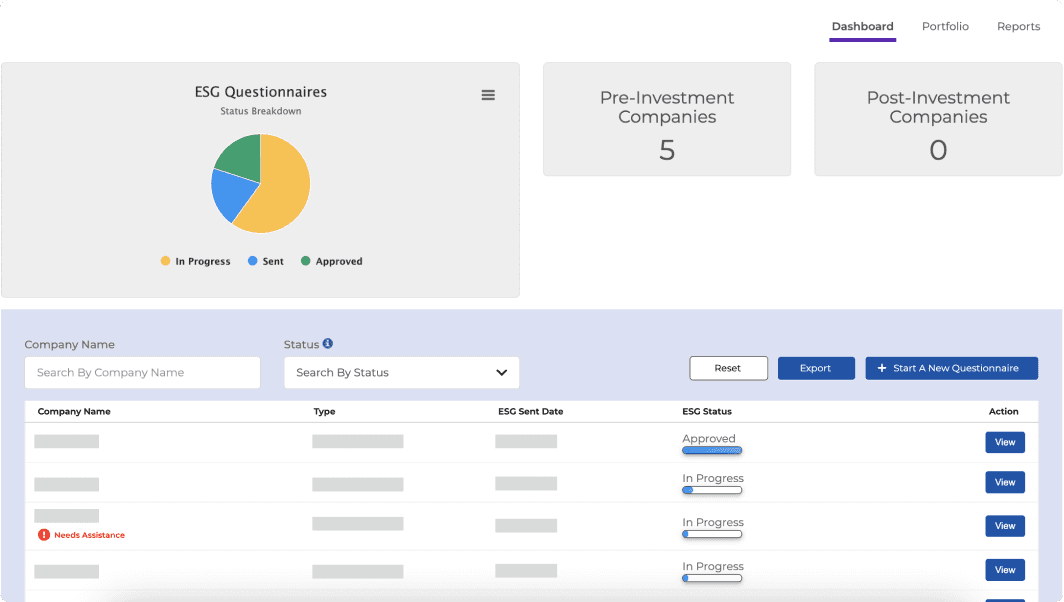
Unclear Filters
Uninformative Charts
Limited Guidance
Hierarchy Issues
My Challenge
How might we help analysts easily navigate and interpret ESG data across portfolio companies so they can make more informed investment decisions?
Usability Evaluation
Given the short timeline, I conducted a focused usability evaluation to identify the most critical issues affecting navigation, hierarchy, and data filtering.
Determine Constraints
Worked closely with the product owner and development team to understand technical constraints and determine which improvements were feasible within the low-code environment
Build & Deliver
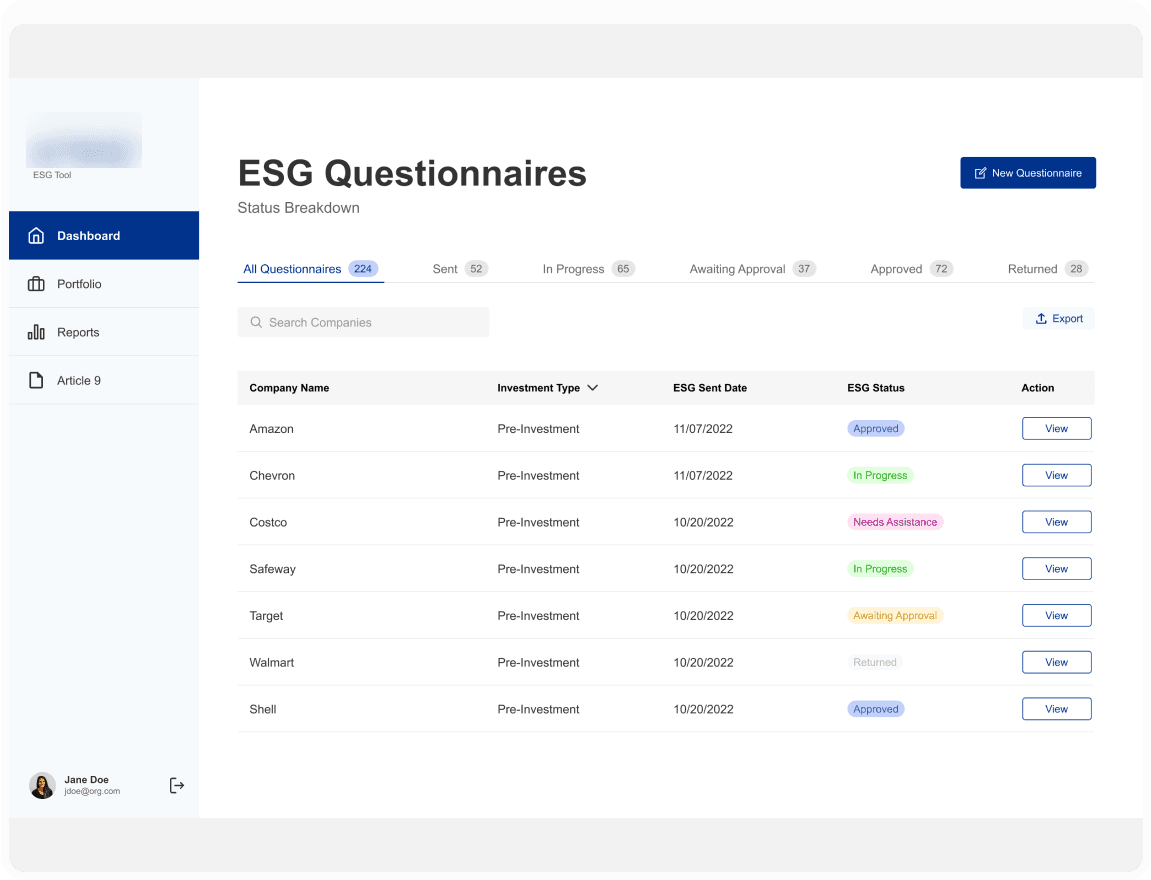
Redesigned key screens to improve layout clarity, filtering, and information hierarchy so analysts could more quickly locate and interpret relevant ESG data.
Solution
Creating a visually appealing, user friendly experience for analysts.
The redesigned platform improved usability and visual clarity while remaining aligned with ESG data governance and ILPA standards through built-in data validation.
As this was a short project within a low-code system, my focus was on improving core usability rather than redesigning full functionality.
Dashboard
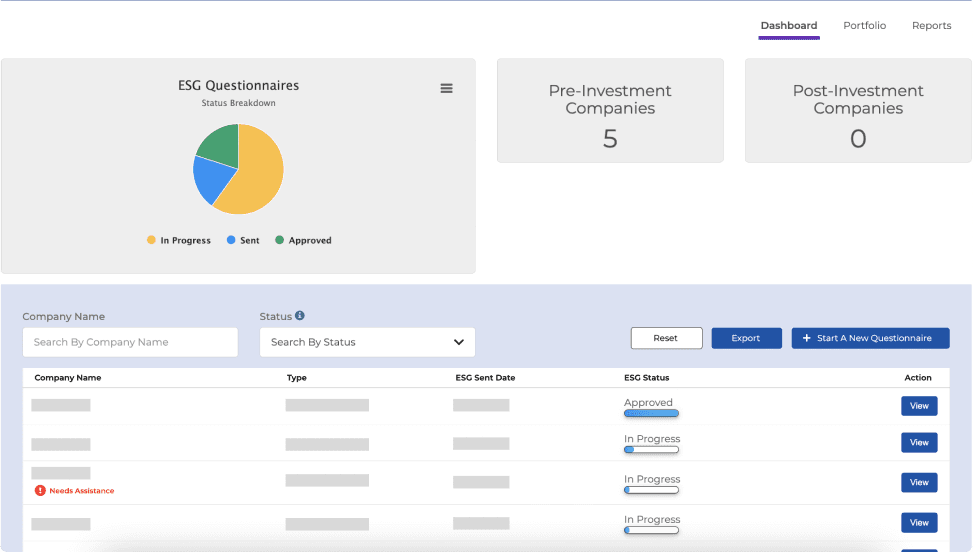
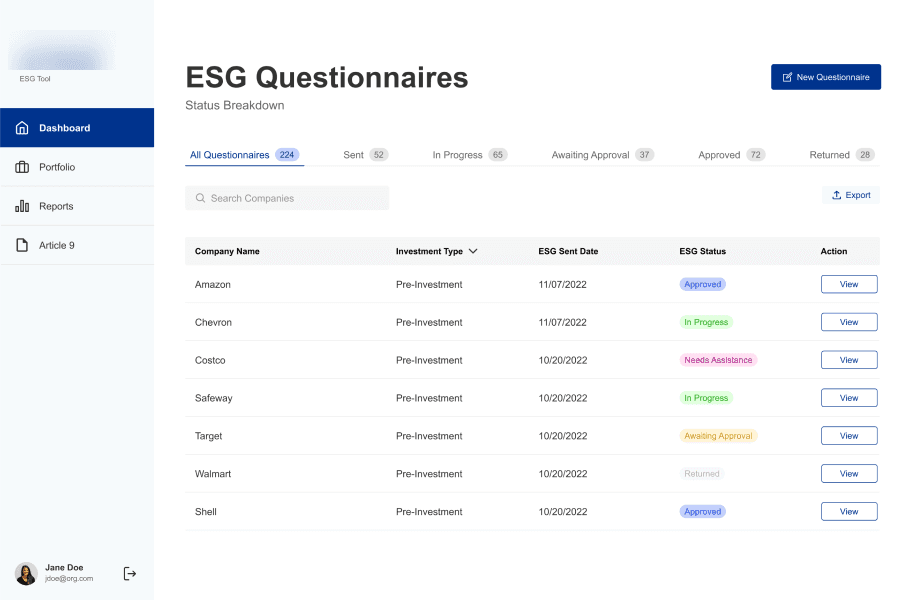
Redesigned the dashboard to make it easier for analysts to track questionnaire status, search and filter by investment type and completion stage, and quickly initiate new ESG assessments. The improved hierarchy reduced visual noise and helped users identify key actions more quickly.
Before
After
Portfolio
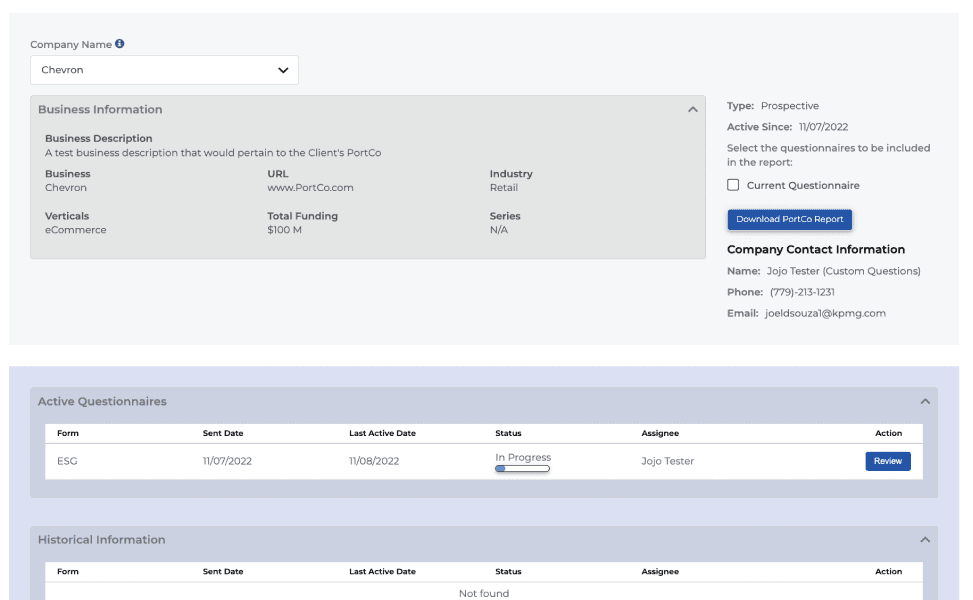
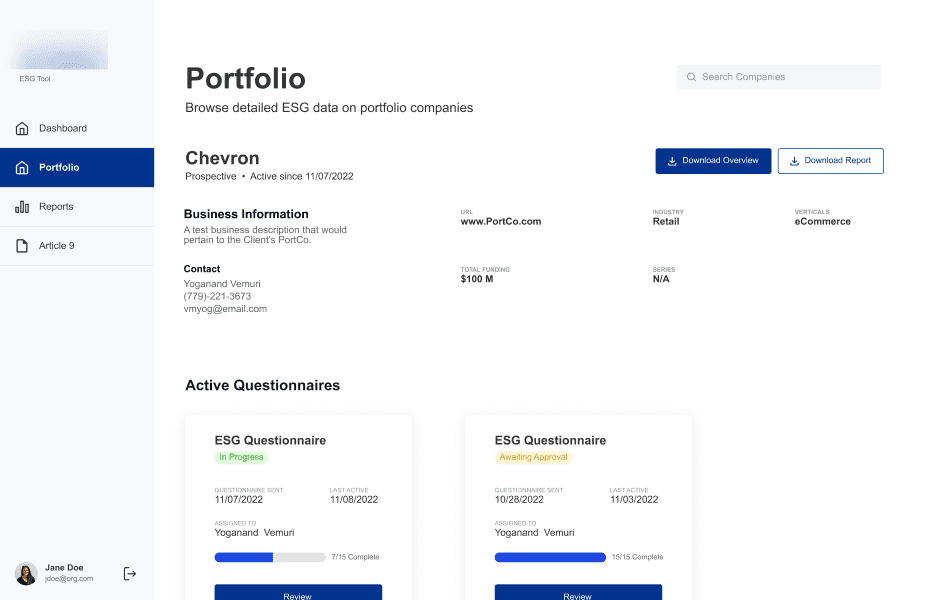
Improved the portfolio view to make historical ESG data easier to browse and export, allowing analysts to review trends across companies more efficiently. If expanded in the future, this page could further improve visibility across all portfolio companies, which was outside the scope of this project.
Before
After
Reports
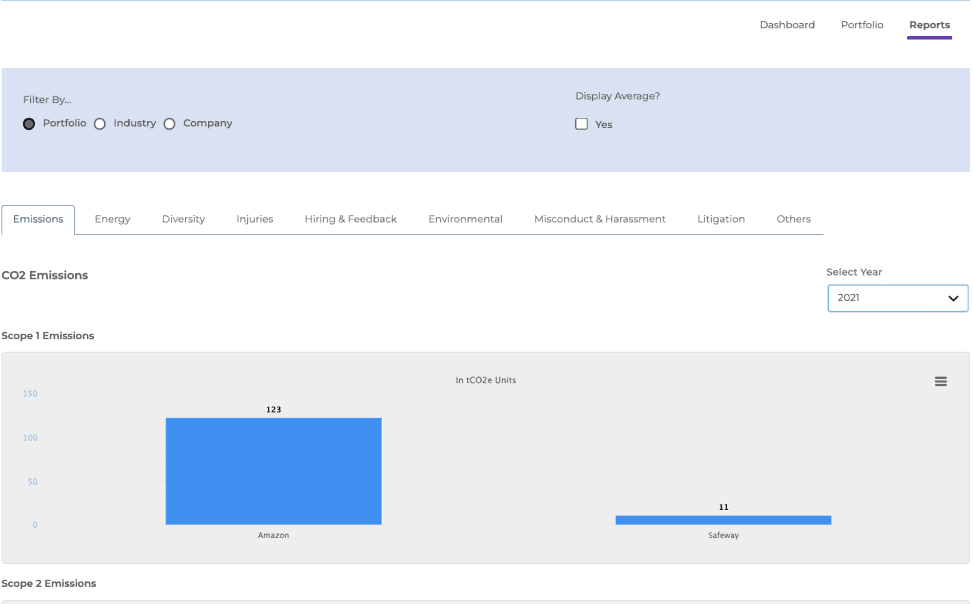
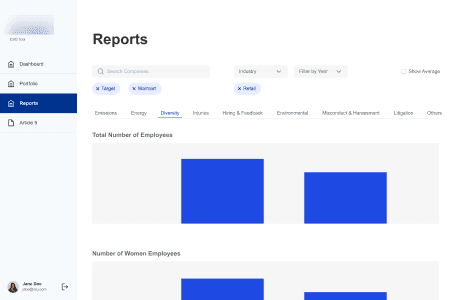
Improved filtering and comparison capabilities across company, year, and industry, enabling analysts to better interpret ESG performance. Due to technical constraints, data visualizations could not be redesigned, but future iterations could focus on more interactive and insight-driven charts.
Before
After
Constraints
How I managed challenges to communicate and deliver effective designs.
Challenge 1: Limited Timeline & Funding
The short project timeline required prioritizing core usability improvements while deprioritizing broader UX changes.

My Actions
I created a lightweight design system and developer specifications in Figma to ensure designs could be efficiently implemented and maintained.
Challenge 2: Data Visualization Limitations
Because the tool was built in a low-code platform (Unqork), there were limitations in how ESG data could be visualized, restricting deeper analytical improvements.
My Actions
I proposed future visualization improvements while focusing on improving layout, clarity, and visual usability within the existing constraints.
Outcomes
How do we measure the impact of these changes?
While I can’t measure the exact impact of these design changes, the following KPIs and success metrics were captured following implementation;
Projected KPIs
20% increase in analyst productivity
~90% completion rates and improved data accuracy due to clearer in-platform guidance
ESG Application for Good award from an alliance partner
Opportunities
What would I do differently?
As this was a rapid, one-week sprint focused on solving immediate usability issues within a low-code environment, I prioritized the most urgent dashboard and portfolio screen updates. If I were to move this project past the MVP stage, I would consider:
Ecosystem Connections -> Explore how this tool could better connect with other internal systems to streamline the ESG data flow and reduce manual touchpoints for analysts.
Deeper Persona Research -> Conduct more discovery sessions with different user types to see how we could make the reporting side as intuitive as the analyst dashboard.
Advanced Data Interactivity -> Push past the technical constraints of the low-code platform to build more interactive visualizations that allow for deeper data analysis.